
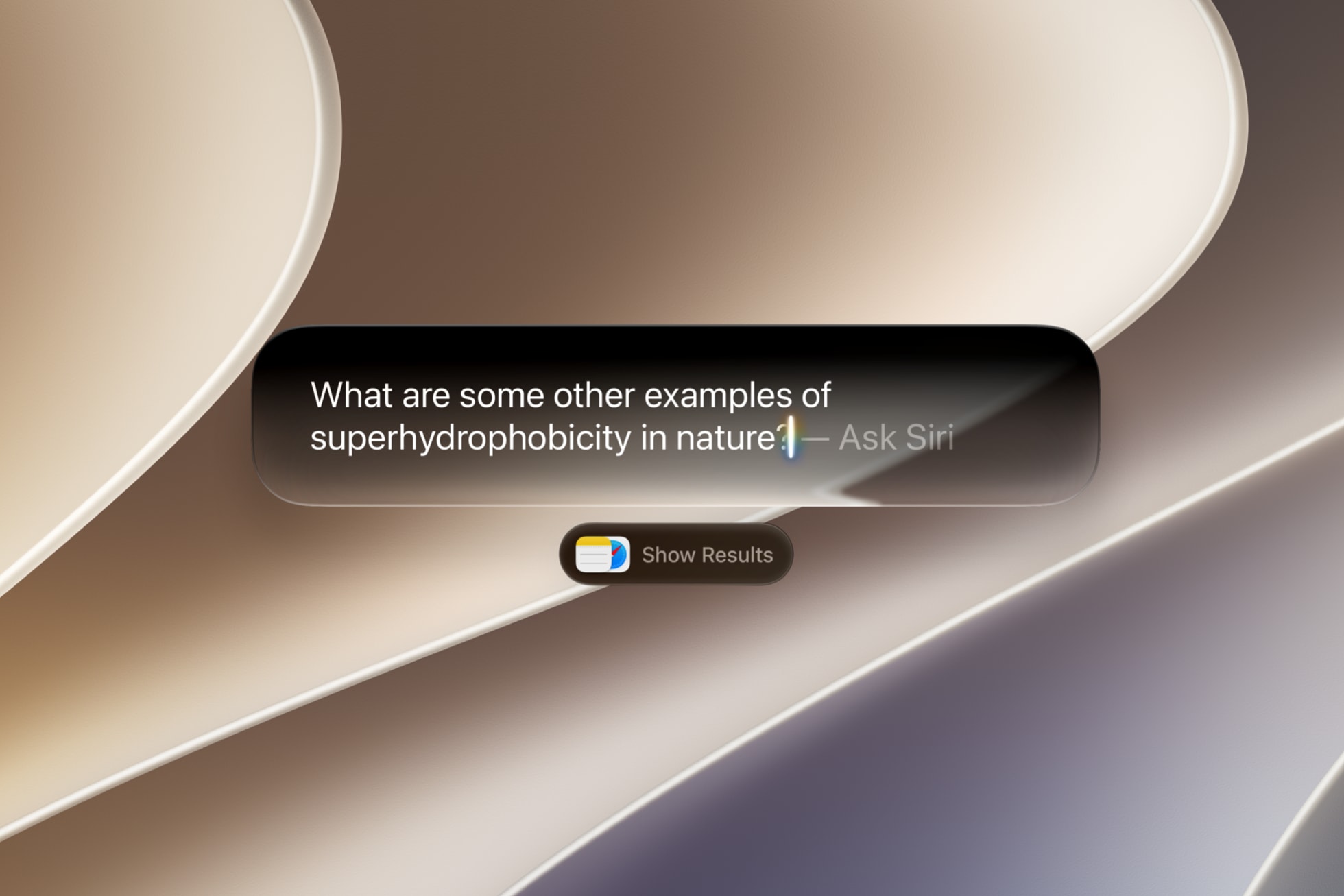
Apple’s long-awaited Siri AI has finally arrived, marking a pivotal moment in the tech giant’s artificial intelligence strategy. Unveiled at WWDC 2026, the redesigned assistant promises seamless multi-turn conversations, deep integration with user data, and cross-app functionality. Yet beneath the polished presentation lies a more complex reality—one shaped by an unexpected partnership and a fragmented global rollout that leaves much of the world waiting.
The new Siri isn’t just an upgrade; it’s a complete rebuild, designed to address years of criticism over its limited capabilities. Users can now expect real-time web queries, contextual understanding of emails and photos, and a dedicated app alongside system-wide accessibility. But as Apple celebrates this leap forward, two critical questions emerge: Who powers Siri AI behind the scenes, and who actually gets to use it?
Apple’s most significant revelation came not in a bold announcement but in a subtle disclosure. The company confirmed a partnership with Google, leveraging the Gemini family of AI models to develop its next-generation Apple Foundation Models—the backbone of Siri AI. This move marks a dramatic departure from Apple’s previous insistence on in-house development, signaling that even the world’s most valuable tech company couldn’t bridge the AI gap alone.
For years, Apple maintained that its proprietary models would eventually match or surpass competitors. Yet, the reality proved different. By aligning with Google, Apple has effectively conceded that the race for AI dominance requires more than just resources—it demands collaboration. This shift raises broader questions about the feasibility of sovereign AI initiatives worldwide, particularly for governments and corporations betting on self-sufficiency.
Apple didn’t shy away from addressing the elephant in the room. Craig Federighi, Apple’s senior vice president of software engineering, emphasized the company’s unwavering commitment to privacy. “We believe privacy in AI is non-negotiable,” he stated, assuring users that their data would only be used to fulfill requests and remain subject to third-party verification.
While Apple’s privacy architecture may hold up, the strategic implications are harder to ignore. By relying on Google’s AI models, Apple has tied its assistant’s intelligence to its biggest search rival—a company that’s aggressively pushing Gemini across Android, Workspace, and its own hardware. The terms of this arrangement remain undisclosed, but the message is clear: even Apple must adapt to the realities of the AI landscape.
Apple’s initial Siri AI beta, set to launch later this year, will support English exclusively. This decision alone excludes a vast portion of the global market, particularly in regions where Mandarin, Japanese, Korean, Bahasa, and Hindi dominate. For users in these fast-growing smartphone markets, the wait for a fully localized Siri AI remains indefinite.
The exclusions don’t stop there. China, Apple’s most fiercely contested market, is entirely off the map due to unresolved regulatory hurdles. Meanwhile, EU users won’t see Siri AI on iPhones or iPads at launch, though Apple has hinted at a future workaround. For now, availability in the EU is limited to macOS 27 and visionOS 27, leaving millions of iPhone users with the older, less capable version.
This fragmented rollout stands in stark contrast to Apple’s historical approach. The company built its reputation on delivering the same product, at the same time, to users worldwide. Yet with Siri AI, Apple has broken from tradition, prioritizing English-speaking markets while leaving others in limbo. The decision underscores the challenges of balancing innovation with regulatory and linguistic diversity—a tension that’s likely to persist as AI becomes more central to Apple’s ecosystem.
Apple’s WWDC 2026 keynote was structured to manage expectations. Rather than positioning Siri AI as the star of the show, the company framed it as one of many improvements—a subtle acknowledgment that this was as much about fixing past shortcomings as it was about showcasing future potential. Observers noted that Apple spent significant time addressing what was broken before highlighting what was new.
This approach reflects a broader transition within the company. With Tim Cook’s final WWDC as CEO and John Ternus set to take over in September, the event carried added weight. Cook’s closing remarks—”I truly believe the best is still ahead at Apple”—hinted at optimism, but the reality is that Siri AI’s success will depend on how quickly Apple can expand its reach and refine its capabilities.
Siri AI represents a genuine leap forward for Apple, but its long-term impact remains uncertain. The Google partnership provides a much-needed boost, yet it also raises questions about Apple’s ability to innovate independently in AI. Meanwhile, the limited rollout risks alienating non-English-speaking users and those in key markets like China and the EU.
For Apple, the next few years will be critical. The company must prove that Siri AI can evolve beyond its current limitations while maintaining the privacy standards it’s known for. If successful, this could redefine Apple’s role in the AI era. If not, it may serve as a cautionary tale about the challenges of catching up in a rapidly advancing field.
Apple collaborated with Google to leverage the Gemini AI models, accelerating its development of Apple Foundation Models. This partnership allowed Apple to close the AI gap more quickly than it could have alone, despite its significant resources.
Apple hasn’t provided a timeline for additional language support. The initial beta is English-only, and no updates have been shared regarding localization for other languages.
China’s exclusion stems from unresolved regulatory requirements, while EU availability is limited due to compliance challenges. Apple is working on solutions but hasn’t specified when these markets will gain full access.
Apple’s Siri AI launch marks a turning point for the company, blending innovation with strategic compromises. The Google partnership underscores the challenges of competing in AI without relying on external expertise, while the fragmented rollout highlights the complexities of global deployment. For now, Siri AI is a promising but incomplete solution—one that leaves many users waiting for the full experience.
As Apple navigates this new era, its ability to expand Siri AI’s reach and refine its capabilities will determine its success. The company’s reputation for seamless global launches is at stake, as is its position in the AI race. Whether Siri AI becomes a cornerstone of Apple’s future or a cautionary tale about the difficulties of catching up remains to be seen.