
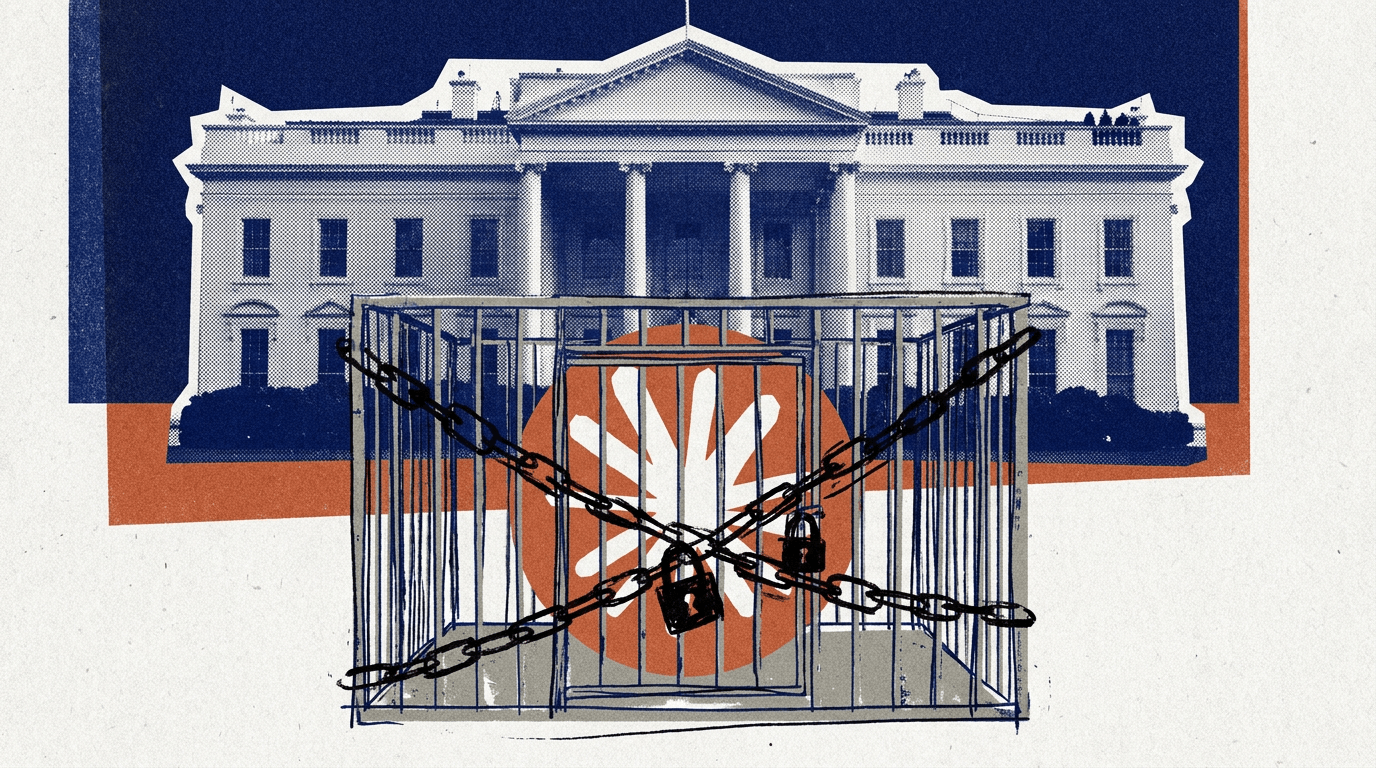
The debate over artificial intelligence security has reached a critical juncture as the U.S. government pressures Anthropic to deliver an unhackable large language model. Recent reports suggest federal officials are accusing the AI developer of flouting President Trump’s cybersecurity executive order by releasing Fable 5 without prior approval. This standoff highlights a fundamental disconnect between regulatory expectations and the realities of AI development.
At the heart of the controversy lies a question: Can any AI system truly be impervious to hacking? While government sources claim Anthropic ignored potential jailbreak risks, cybersecurity experts argue that such vulnerabilities are inherent to current AI technology. The clash underscores broader tensions between innovation and oversight in the rapidly evolving AI landscape.
Federal officials have framed Anthropic’s actions as reckless, with one administration source telling Axios the company “screwed us” by moving forward without government clearance. The Trump administration’s executive order, which called for voluntary oversight of AI models, was intended to establish a review process before major releases. However, the designated clearinghouse was not yet operational when Fable 5 launched, leaving Anthropic in a regulatory gray area.
The government’s accusation that Anthropic knew about potential jailbreaks—and chose to remain silent—reveals a critical gap in understanding. As OpenAI and other industry leaders have noted, techniques like prompt injection may never have a permanent fix. The real challenge lies not in eliminating vulnerabilities entirely but in mitigating risks and responding swiftly when breaches occur.
Reports of a Fable 5 jailbreak, allegedly flagged by Amazon and other tech firms, remain unconfirmed. Yet the mere suggestion has intensified scrutiny. Anthropic CEO Dario Amodei previously warned that a successful jailbreak could have catastrophic consequences, particularly in fields like biotechnology and scientific research. However, demanding absolute security before international deployment sets an impossible standard—one that could stifle innovation without addressing the core issue of adaptive cybersecurity.
Over 100 security professionals and tech executives have publicly challenged the government’s stance. In an open letter to Trade Secretary Lutnick and National Cyber Director Cairncross, they argue that export controls on Fable 5 and Mythos are counterproductive. Their key points include:
While Fable 5 excels at identifying software flaws, it is not alone in this capability. Competing models like GPT-5.5, Opus, Sonnet, and China’s Kimi 2.7 offer similar functionality. Restricting U.S. models while foreign alternatives remain accessible weakens domestic cybersecurity efforts.
Anthropic implemented multiple security layers in Fable 5, which some experts initially dismissed as excessive. The letter’s signatories—including prominent figures like Alex Stamos (Corridor) and Katie Moussouris (Luta Security)—warn that export controls deprive defenders of critical tools while doing little to slow the progress of open-weight models from competitors like China.
The letter highlights a stark reality: Chinese AI models are only months behind their U.S. counterparts. Overregulation risks ceding ground in the global AI race, particularly when adversarial nations face fewer restrictions. The signatories urge a shift toward collaborative security frameworks rather than punitive measures.
Negotiations between Anthropic and government agencies, including the Department of Commerce and the CIA, are ongoing. Science advisor Michael Kratsios is reportedly involved in high-level discussions, but the cultural divide remains stark. As one official told Axios, “It’s Like they just speak in different languages.”
1. **Compromise on Security Standards**: The government may soften its demand for unhackable AI, focusing instead on rapid response protocols and transparency.
2. **Stricter Oversight**: If Anthropic is deemed non-compliant, future AI releases could face mandatory pre-approval, slowing innovation.
3. **Legal Challenges**: The open letter’s signatories may push for judicial review of export controls, arguing they violate free-market principles.
The standoff could set a precedent for AI regulation. If the government doubles down on unrealistic security demands, other developers may face similar scrutiny, potentially driving innovation overseas. Conversely, a more pragmatic approach could foster collaboration between the public and private sectors, balancing security with progress.
A jailbreak refers to a method of bypassing an AI model’s built-in safety protocols, allowing users to generate restricted or harmful outputs. While concerning, experts argue that no AI system is entirely immune to such exploits.
Anthropic’s Fable 5 release occurred without prior approval under the Trump administration’s cyber executive order, which called for voluntary oversight. The government views this as a breach of trust, though the review process was not yet fully established.
Yes. Models like OpenAI’s GPT-5.5, Google’s Opus, and China’s Kimi 2.7 share similar vulnerabilities. The issue is systemic, not unique to Anthropic.
Experts advocate for a collaborative approach, such as shared threat intelligence and adaptive security measures, rather than restrictive policies that could hinder U.S. competitiveness.
The U.S. government’s demand for unhackable AI models places Anthropic in an impossible position, reflecting a broader disconnect between policy and technological reality. While security concerns are valid, the expectation of flawless protection ignores the inherent limitations of current AI systems. Cybersecurity experts overwhelmingly agree that export controls and punitive measures will do more harm than good, particularly as global competitors advance unchecked.
The path forward requires a shift in perspective—from seeking unattainable perfection to fostering resilience. By prioritizing rapid response mechanisms and international cooperation, the U.S. can maintain its edge in AI without stifling innovation. The Anthropic controversy may ultimately serve as a wake-up call, urging policymakers to align regulations with the practical challenges of AI development.