


Artificial intelligence has long struggled with a deceptively simple task: accurately counting objects in images. While modern AI systems excel at describing scenes, interpreting charts, and extracting text, reliable object quantification has remained an elusive challenge—until now. The newly unveiled Count Anything model promises to revolutionize this capability by delivering precise counts across diverse visual domains, from medical scans to satellite imagery, using only text prompts.
This innovation addresses a critical gap in AI functionality. Whether it's radiologists analyzing cell clusters, urban planners assessing traffic patterns, or farmers estimating crop yields, accurate object counting plays a vital role in countless professional fields. Previous solutions required specialized systems for each use case, but Count Anything aims to provide a universal solution that adapts to virtually any counting scenario through natural language instructions.
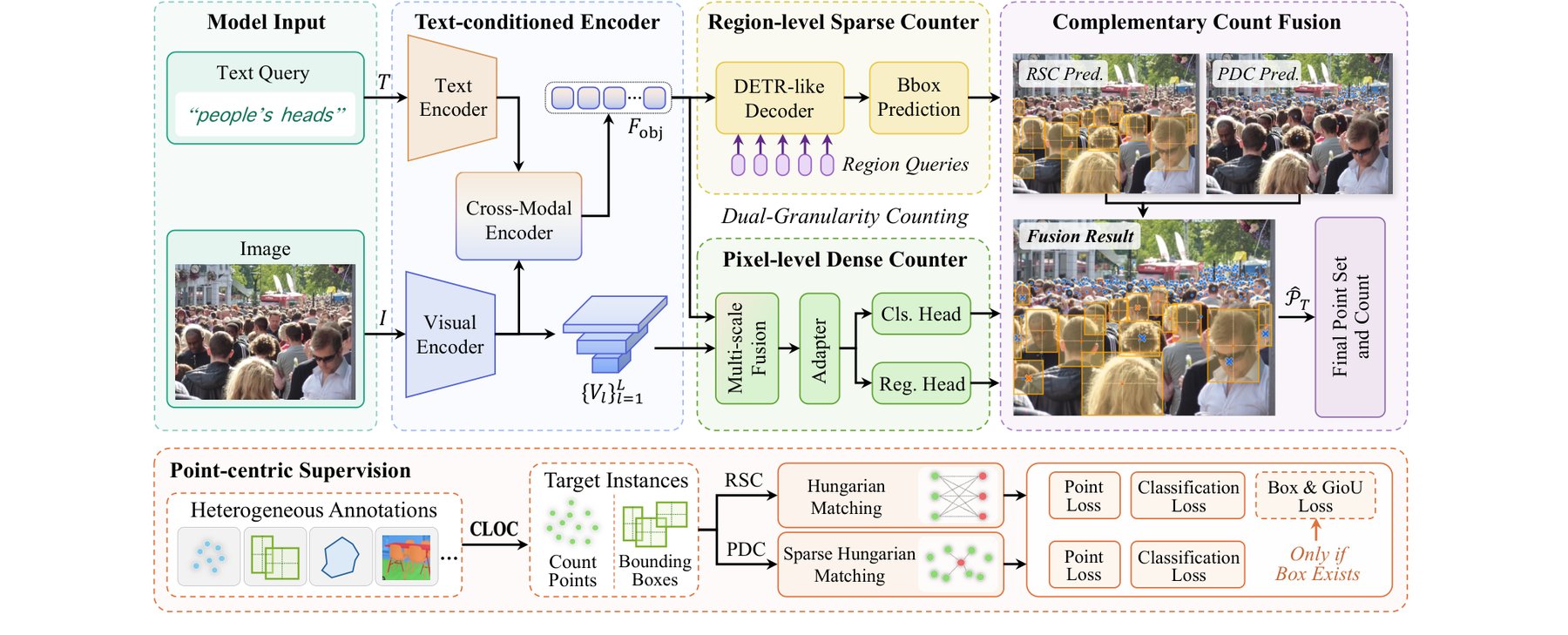
The model’s core innovation lies in its hybrid detection system that merges two complementary approaches. The first method specializes in identifying larger, distinct objects by drawing bounding boxes around them. The second technique focuses on small, densely packed items by placing precise points on each target. This dual strategy ensures comprehensive coverage across different object sizes and densities.
After generating predictions from both detection methods, Count Anything employs a sophisticated merging algorithm. When both counters identify the same object, the system retains only the prediction with higher confidence. This simple yet effective rule prevents duplicate counting while maintaining accuracy across diverse visual scenarios.
The model builds upon Meta's SAM3 foundation, which already possesses robust image and text processing capabilities. Rather than retraining the entire architecture, developers added specialized adapter components specifically designed for counting tasks. This approach preserves the underlying model's strengths while enhancing its quantitative capabilities.
To achieve its remarkable versatility, Count Anything required an equally diverse training dataset. Existing public datasets typically focused on single domains like medical imaging or satellite photography. Researchers addressed this limitation by creating CLOC (Cross-domain Large-scale Object Counting), which they claim is the largest dataset of its kind.
CLOC combines approximately 220,000 images spanning six distinct categories:
– Everyday photographs
– Satellite and drone imagery
– Medical tissue samples
– Microscopic cell images
– Agricultural scenes
– Bacterial culture photos
This comprehensive collection contains 619 object categories and over 15 million labeled instances. The dataset's breadth enables Count Anything to handle counting tasks across vastly different visual contexts with remarkable consistency.
Analysis of training results reveals a clear correlation between dataset size and model accuracy. As the volume of training data increases, error rates decrease significantly. This demonstrates the value of large, diverse datasets in developing robust counting capabilities that generalize across multiple domains.
In comparative tests against established models like CountGD, CLIP-Count, and Grounding DINO, Count Anything consistently outperforms its rivals. On average, the model deviates by only nine objects per category in test images, while the best competing system shows errors more than twice as large.
While Count Anything excels in most scenarios, it faces challenges in specific situations. The model occasionally struggles with ambiguous terminology or highly specialized jargon that wasn’t well-represented in its training data. Additionally, extremely dense scenes with significant object occlusion can create difficulties in distinguishing individual items.
For crowd counting applications, Count Anything remains competitive but doesn't quite match the precision of specialized systems designed exclusively for that purpose. However, its ability to handle diverse counting tasks more than compensates for this minor limitation in specialized scenarios.
Unlike specialized counting systems, Count Anything handles diverse image types through a single model using text prompts. Its dual-counter approach and extensive training dataset enable it to count objects across six different visual domains with remarkable accuracy.
Yes, the model demonstrates strong performance on medical scans, including tissue samples and microscopic cell images. However, users should verify results with professional medical expertise for critical applications.
While the model achieves impressive accuracy, it may still make errors in complex scenes. For most applications, its performance rivals human counting speed while maintaining consistency across large datasets.
The introduction of Count Anything represents a significant leap forward in AI's ability to quantify visual information. By combining dual detection methods with an extensive cross-domain training dataset, this model achieves unprecedented versatility in object counting tasks. Its performance across diverse visual domains—from satellite imagery to microscopic analysis—demonstrates the potential for universal counting solutions in artificial intelligence.
While not without limitations, particularly in highly specialized or ambiguous scenarios, Count Anything establishes new benchmarks for accuracy and adaptability. The model's open-source availability promises to accelerate research and practical applications across numerous fields that depend on precise object quantification. As AI continues to evolve, innovations like Count Anything bring us closer to systems that can truly understand and interpret the visual world with human-like precision.





