

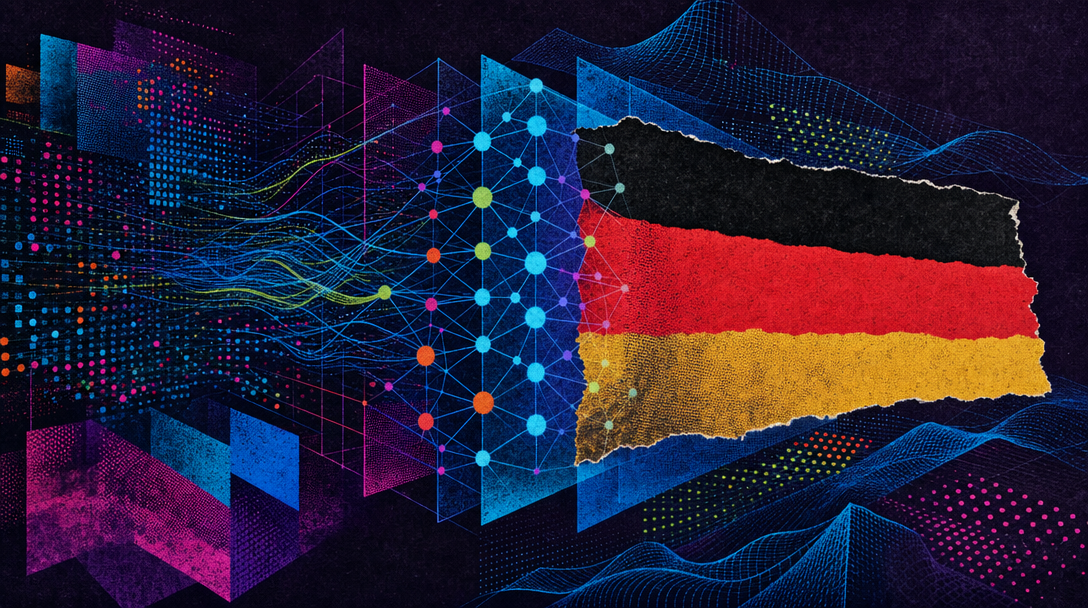
Germany has taken a decisive step toward strengthening its artificial intelligence governance by approving the creation of a dedicated AI Safety Institute. This initiative, endorsed by the National Security Council under the leadership of the Federal Chancellor, aims to evaluate the capabilities and potential risks of cutting-edge AI systems while fostering international collaboration on safety standards.
The newly proposed German AI Security Institute (DE-AISI) will prioritize assessing how advanced AI models impact cybersecurity within the country. By aligning with global partners, the institute seeks to establish shared frameworks for AI evaluation, ensuring Germany remains at the forefront of responsible AI development. The move reflects growing recognition of AI’s dual role as both a transformative tool and a potential security challenge.
The decision to model DE-AISI after the United Kingdom’s AI safety Institute (UK AISI) stems from the UK’s proven track record in AI risk assessment. The UK AISI has gained global recognition for its rigorous pre-release testing of high-profile AI models, including Anthropic’s Mythos series and OpenAI’s GPT-5.5. These evaluations have set a benchmark for identifying security vulnerabilities before deployment.
Industry leaders, such as Germany’s Bitkom, have emphasized the importance of replicating the UK’s approach. In a recent statement, Bitkom highlighted the need for DE-AISI to adopt the UK AISI’s methodology, which combines technical expertise with agile governance. To achieve this, the German institute will require top-tier talent, competitive compensation structures, and robust political support to engage effectively with leading AI developers like Anthropic and OpenAI.
The German AI Safety Institute will focus on three core areas:
– **Risk Assessment:** Evaluating AI models for cybersecurity threats and societal impacts.
– **International Collaboration:** Partnering with global AI safety organizations to develop unified standards.
– **Talent Acquisition:** Recruiting world-class experts to ensure Germany remains competitive in AI governance.
While Germany’s initiative marks progress, the broader European Union continues to face challenges in accessing cutting-edge AI models for independent testing. Despite efforts by the European Cybersecurity Agency (ENISA) to secure access to systems like Anthropic’s Mythos, no official confirmation of successful cooperation has been announced. Reports suggest ENISA may soon gain limited access, but details remain unclear.
This dependency underscores Europe’s reliance on AI technologies developed in the United States and China. Both countries exert significant influence over their domestic AI firms, often aligning them with national security priorities. For instance, Anthropic has reportedly collaborated with the U.S. government on deploying AI models for offensive cyber operations. Such ties highlight the geopolitical complexities of AI development and the need for Europe to cultivate its own capabilities.
The race to regulate AI reflects broader tensions between technological innovation and national security. As governments worldwide tighten controls over AI development, Europe risks falling behind without a cohesive strategy. Germany’s AI Safety Institute represents a critical step toward bridging this gap, but sustained investment in homegrown AI research will be essential for long-term autonomy.
The institute will assess AI models for security risks, promote international collaboration, and develop safety standards to protect Germany’s cybersecurity interests.
DE-AISI is modeled after the UK AISI, which has gained acclaim for its rigorous pre-release testing of advanced AI systems. Germany aims to replicate this approach with a focus on technical expertise and global partnerships.
Europe currently lacks its own frontier AI models, forcing dependence on foreign providers. This reliance poses challenges for independent testing and regulatory oversight.
Germany’s establishment of the AI Safety Institute signals a proactive approach to AI governance, drawing inspiration from the UK’s successful framework. By prioritizing risk assessment, international cooperation, and talent acquisition, DE-AISI aims to position Germany as a leader in AI safety. However, Europe’s broader dependence on foreign AI technology remains a critical hurdle.
To achieve true technological sovereignty, European nations must invest in domestic AI research and development. Germany’s initiative is a promising start, but sustained efforts will be necessary to ensure the continent remains competitive in the rapidly evolving AI landscape. As AI continues to reshape global security dynamics, proactive governance will be key to balancing innovation with safety.