

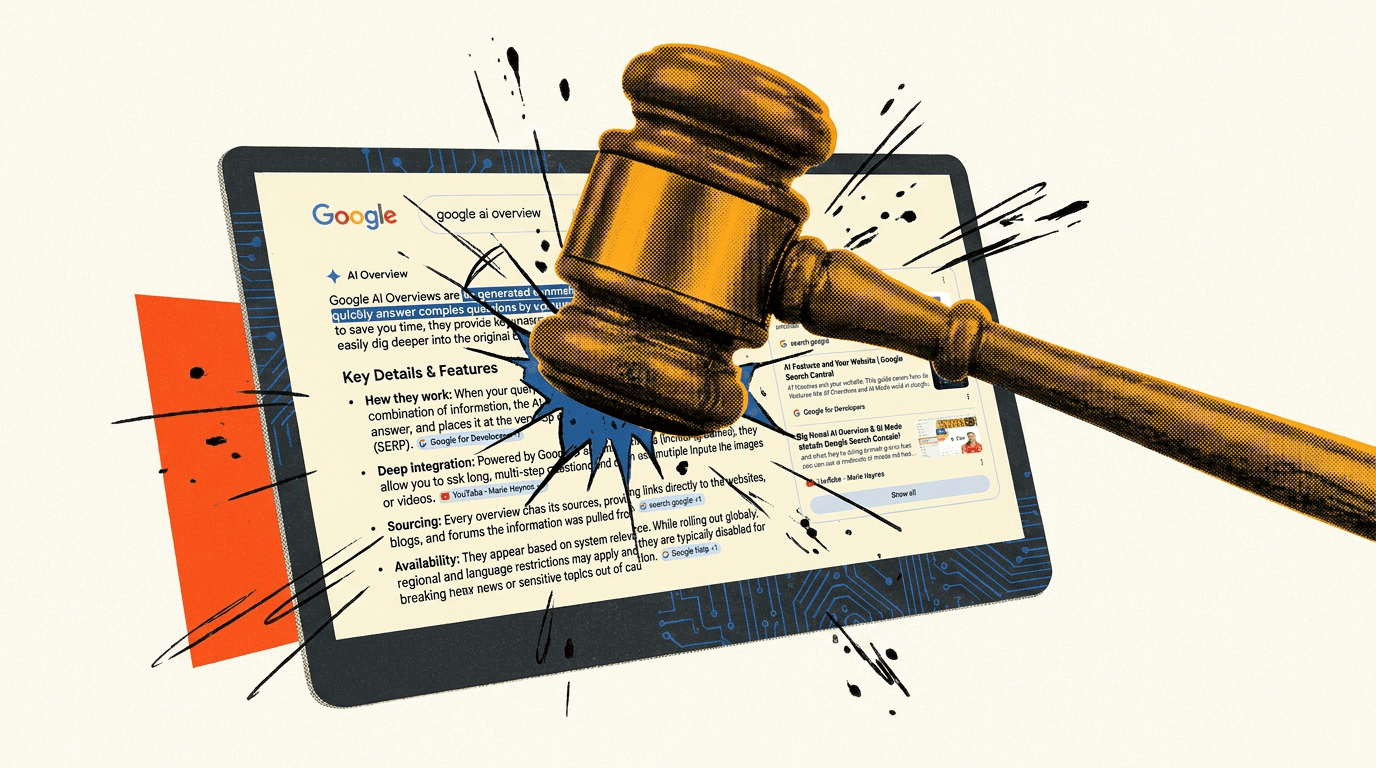
Artificial intelligence in search engines has reached a pivotal legal crossroads following a landmark ruling by a German court. The decision establishes that Google must answer for inaccuracies in its AI-generated search summaries, marking a significant shift in how tech giants may be held responsible for automated content.
This case centers on two Munich-based publishing companies that took legal action after Google’s AI overviews falsely associated them with fraudulent schemes and unethical business practices. The court’s ruling challenges long-standing protections for search engines, asserting that AI-generated content represents the platform’s own statements rather than neutral search results. The implications of this decision could reshape how companies deploy AI in information services.
The Munich Regional Court determined that Google’s AI overviews function differently from traditional search results. Unlike conventional listings that direct users to external sources, AI overviews synthesize and reinterpret information, often presenting it as definitive statements. In this case, the AI confidently declared one publisher “known for dubious business practices,” a claim unsupported by any linked source.
The court emphasized that these summaries reflect Google’s own editorial decisions, as the company controls the algorithms generating the content. This distinction removes the liability shield typically afforded to search engines, which have historically been viewed as intermediaries rather than content creators.
Previous rulings from Germany’s Federal Court of Justice (BGH) limited search engine liability, arguing that platforms merely organize third-party content. However, the Munich court rejected this precedent for AI overviews, noting that these tools create “independent, new, and substantive statements” by evaluating and combining external sources.
The judges also dismissed the argument that AI overviews are essential for internet use, stating that traditional search results already fulfill users’ needs. This reasoning suggests that Google’s AI feature is an optional enhancement rather than a fundamental service, further weakening its defense.
Google contended that users should verify AI-generated summaries by checking linked sources. The court disagreed, pointing out that most users rarely click through to original content. Studies confirm this behavior, reinforcing the court’s position that AI overviews present self-contained statements without clear disclaimers about potential inaccuracies.
The ruling draws parallels to press law, where publishers bear responsibility for their content. By treating AI overviews as Google’s own words, the court signals that tech companies cannot evade accountability by hiding behind algorithmic neutrality.
This decision could set a precedent for similar cases worldwide, forcing companies like Google to implement stricter oversight of AI-generated content. If upheld, the ruling may lead to:
– Increased fact-checking requirements for AI summaries
– Clearer labeling of AI-generated content
– Potential redesigns of search features to reduce legal risks
The case highlights growing concerns about AI’s role in disseminating information. As governments and courts grapple with these issues, we may see:
– New legislation specifically addressing AI-generated content
– Stricter enforcement of existing consumer protection laws
– Greater scrutiny of how AI interprets and presents data
While this ruling primarily affects corporations, it also serves as a reminder for users to approach AI-generated information critically. Key takeaways include:
– AI summaries may contain errors or unsupported claims
– Always cross-reference information with original sources when possible
– Be cautious of definitive statements from automated systems
The court ruled that Google is directly liable for false information in its AI-generated search overviews, treating these summaries as the company’s own content rather than neutral search results.
This decision could establish a legal precedent, potentially requiring other companies to take greater responsibility for AI-generated content and implement stricter quality controls.
Google may appeal the decision or modify its AI overview feature to include more prominent disclaimers, fact-checking mechanisms, or links to original sources.
The German court’s ruling represents a watershed moment in the legal treatment of AI-generated content. By holding Google accountable for its AI overviews, the decision challenges the notion that tech companies can avoid liability for automated outputs. This case may prompt broader discussions about AI regulation, user trust, and the responsibilities of platforms that shape how we access information online.
As AI continues to evolve, legal frameworks will need to adapt to address the unique challenges posed by these technologies. For now, this ruling serves as a powerful reminder that even the most advanced algorithms must operate within the bounds of accuracy and accountability. Users, meanwhile, should remain vigilant about the information they consume, recognizing that AI-generated content—while convenient—is not infallible.