
Apple Intelligence has taken a dramatic leap forward, marking a pivotal moment in the tech giant’s AI strategy. At WWDC 2026, Apple unveiled a completely overhauled Siri, now rebranded as “Siri AI,” designed to deliver system-wide functionality and deeper integration across devices. This transformation relies on a strategic partnership with Google for foundational AI models and Nvidia’s cloud infrastructure to handle complex tasks. However, the rollout comes with significant limitations, including hardware requirements and regional restrictions that could shape user adoption.
The revamped assistant promises to redefine how users interact with their devices, from managing passwords to analyzing visual content. Yet, questions linger about performance, privacy, and accessibility—especially for those without the latest hardware. Here’s everything you need to know about Apple’s bold AI ambitions and the challenges ahead.
Apple’s latest AI breakthrough didn’t happen in isolation. The company joined forces with google to develop its “Apple Foundation Models” (AFM), leveraging Gemini technology as a foundation. Despite the collaboration, Apple insists its approach remains distinct. During a post-keynote Tech Talk, Senior VP Craig Federighi clarified that Apple doesn’t rely on Google’s Gemini app, its consumer-facing models, or even Google Search for data. Instead, Apple built its own “World Knowledge Service” over several years to power Siri AI’s contextual understanding.
The AFM lineup includes five models, each optimized for different tasks. Four smaller models—AFM Core, AFM Core Advanced, AFM Cloud, and AFM Cloud Image—were trained specifically for Apple Silicon and refined using outputs from Google’s frontier models. The most powerful variant, AFM Cloud Pro, operates on Nvidia GPUs within Apple’s Private Cloud Compute infrastructure, which now extends into Google Cloud. Apple’s AI lead, Amar Subramanya, told CNBC that AFM Cloud Pro matches the quality of Google’s top-tier Gemini models, though no independent benchmarks have been released yet.
A “System Orchestrator” acts as the brain of the operation, determining whether a request is processed locally on-device or routed to the cloud. Federighi emphasized that this decision-making process is central to Apple’s privacy-first approach, ensuring sensitive data remains secure.
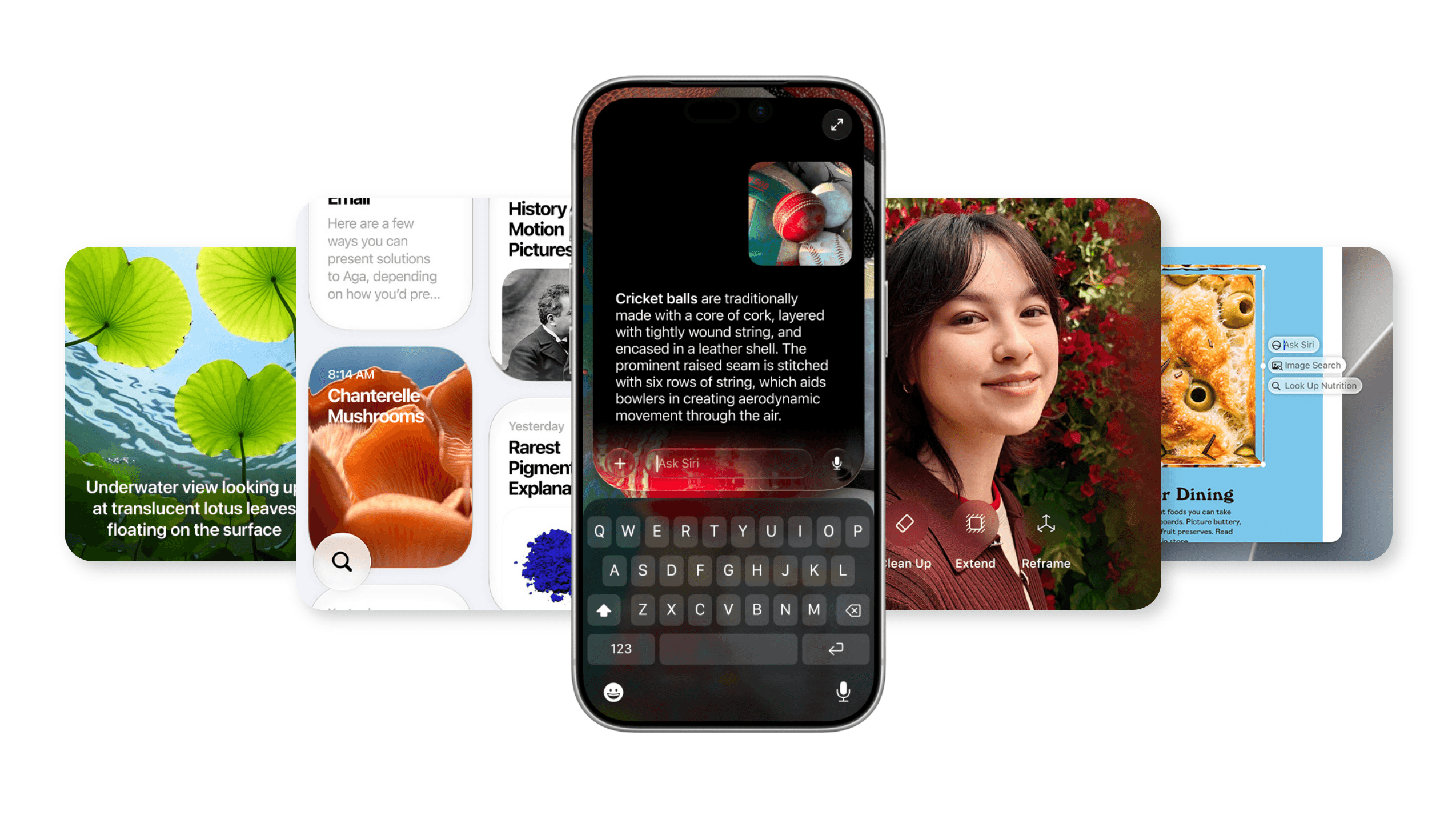
Siri AI isn’t just about text-based interactions. The assistant now includes Visual intelligence, allowing users to point their camera at objects for real-time analysis. For example, scanning a restaurant receipt can automatically split the bill via Apple Cash, while aiming at a meal provides nutritional details. This feature extends to visionOS, Apple’s mixed-reality platform, where it could enhance augmented reality experiences.
Beyond visuals, Apple intelligence introduces automated password management. If a password is compromised, the system can navigate to the relevant website, log in, and generate a new secure password—all without user intervention. While promising, Apple hasn’t disclosed how reliably this feature performs in real-world scenarios.
Other integrations include:
– Safari enhancements like “Notify Me” for updates and smarter tab organization.
– Image Playground, a new app for AI-generated images.
– Spatial Reframing in Photos to adjust image composition automatically.
– AI-powered video descriptions for HomeKit Secure Video clips.
– Summarized notifications in the Home app for quick overviews.
For developers, Apple is opening its Foundation Models Framework, now supporting image inputs, custom skills, and server-side model execution. Xcode also receives an upgraded coding assistant to streamline agentic workflows.
Apple’s AI advancements come with a catch: not all devices will support the most advanced features. The on-device AFM model requires an iPhone 17 Pro or iPhone Air, an iPad with M4 chip and at least 12GB of RAM, or a Mac with M3 chip and 12GB of RAM. Older models, including the iPhone 17 (non-Pro) and iPhone 16 Pro Max, fall short due to insufficient memory. Users with incompatible hardware will still access some features via Private Cloud Compute, but with higher latency.
Geographical limitations add another layer of complexity. Siri AI will initially launch only in English-speaking markets, with a notable exception: the European Union. Due to the Digital Markets Act (DMA), Apple has opted not to release Siri AI on iOS or iPadOS in the EU. The company argues that the DMA would force it to grant third-party virtual assistants the same deep system access as Siri AI, including reading messages, making purchases, and modifying files. Security researchers have already demonstrated how such access could be exploited to steal data or alter settings without user consent.
As a potential compromise, Apple proposed a “Trusted System Agent”—a middleware layer that could theoretically balance compliance with security. However, no timeline has been set for its implementation.
Siri AI is Apple’s next-generation virtual assistant, rebuilt from the ground up with advanced AI capabilities. Unlike the original Siri, it can perform system-wide actions, understand on-screen content, and pull context from messages, emails, and photos. It also syncs conversations across devices via iCloud.
The most powerful on-device AI model needs significant memory to process complex tasks locally. Devices with less than 12GB of RAM will rely on cloud processing, which may introduce delays.
No, Siri AI won’t launch on iPhones or iPads in the EU due to regulatory concerns under the Digital Markets Act. It will, however, be available on macOS and visionOS in the region.
Apple collaborated with Google to develop its foundational AI models but doesn’t use Google’s consumer-facing Gemini app or search data. The partnership primarily involves refining Apple’s own models using Gemini’s outputs.
Apple’s AI renaissance, powered by Google and Nvidia, represents a bold step forward for Siri. The new Siri AI promises deeper integration, smarter automation, and enhanced privacy controls, but its success hinges on overcoming significant barriers. Hardware requirements will limit access for many users, while regulatory challenges in the EU could delay widespread adoption.
For those with compatible devices, the upgrade could redefine daily interactions—from password management to visual analysis. Yet, the exclusion of older models and entire markets raises questions about Apple’s long-term strategy. As the tech landscape evolves, Siri AI’s ability to balance innovation with accessibility will determine whether this second chance at AI dominance pays off.